Unlocking the Potential of Transport as a Catalyst for Economic Growth
By Simon Jones
Chief Executive, Global Centre of Rail Excellence
One of the most important policy developments that we’ve seen at a UK level in the last couple years has been the re-birth of industrial strategy, and through it, looking afresh at the strategic role government can play in supporting economic growth, particularly in deindustrialised areas of the country.
It’s a policy debate that we’ve needed for some time. For more than four decades the prevailing consensus in UK economic policy has been that government should step back from an active role and confine itself to ensuring macro-economic stability and letting the market alone decide when and where capital investment could be most effectively deployed.
But for a significant period of time now – long before the economic crash of 2008 – the limits of that approach have been all too evident. Large swathes of the UK have an economy that doesn’t work as effectively as it should and which could contribute much more to growth. The fundamental economic infrastructure needed to drive growth in these places has been too fragile. De-industrialised areas, in particular, have struggled to gain access to the capital investment they have needed to reshape their economies and develop new industrial purpose.
The result has been the development of a very lop-sided economic model in the UK, with a limited geography around the southeast of England relied upon to generate growth. London alone now accounts for more than 22% of the UK’s GDP – £69,077 per head compared to a UK average of £39,403 and a Welsh average of £29,316 per head. Based on the headline measure of output per hour, the UK capital was 28.5% more productive than the UK average in 2023.
The Industrial Strategy that the UK Government published in 2025 was a welcome attempt to break with that approach and to ensure all parts of the UK could have an economy that functioned effectively. It was also a recognition that government had a special responsibility to take more active steps to encourage growth and particularly to ensure greater fairness in the distribution of capital investment to all parts of the UK to grow their economic base.
But the problem with any strategy is translating it from page to action. A new policy needs buy-in from those involved in its delivery and it needs original intentions to be stuck to. That was a particular risk for the Industrial Strategy which, rightly, had not only a sectoral focus, but a place-based one too. In many ways the strategy is one of the most significant and ambitious growth agendas any UK Government has ever attempted, but it was always going to be challenging to make a break with the culture, practice and risk aversion of the past.
Perhaps the biggest hurdle for Industrial Strategy has been making sure it is – and remains – a genuinely all-of-government mission. Getting buy-in from departments across Whitehall is always tough, but ultimately critical if a step-change in economic growth is to be realised. Transport is one sector that I believe is ready, willing and capable of doing more to create green jobs and catalyse new, place-based growth.
Indeed, it was interesting to see the House of Commons Transport Committee publish a an interesting report recently on the opportunities to make the transition to net zero transport work for manufacturing, people and communities across the UK. The report makes clear that the UK Government and its partners have a ‘once-in-a-generation’ moment to harness the investment being put into areas such as bus, rail and cleaner fuels to stimulate wider economic growth. It made the case for departments to be bolder in using their procurement levers to support a domestic manufacturing base in the UK.
I hope these messages land. The UK Government has itself, rightly, looked to develop a ‘Build it in Britain’ focus in the renewable energy sector and its supply chain through direct government action and risk sharing and there’s no reason why it cant be achieved in areas like transport.
Rail innovation is one area where I think the UK Government could replicate this kind of proactive approach. Another UK Parliament Transport Committee report on Rail Investment Pipelines published in February 2026 highlighted that a clearer and more credible pipeline of projects in rail would encourage long-term investment in the sector. The report made clear that one of the areas where more stable demand would have a particular impact is in rail R&D and innovation, owing to the fact that manufacturers would be more inclined to invest in new technologies if they could see more clearly where the commercial demand was coming from.
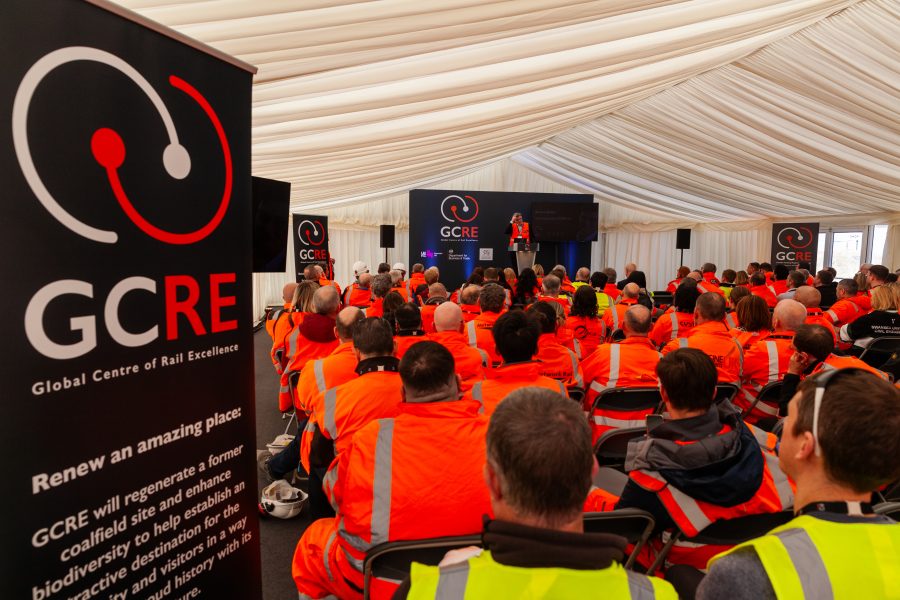
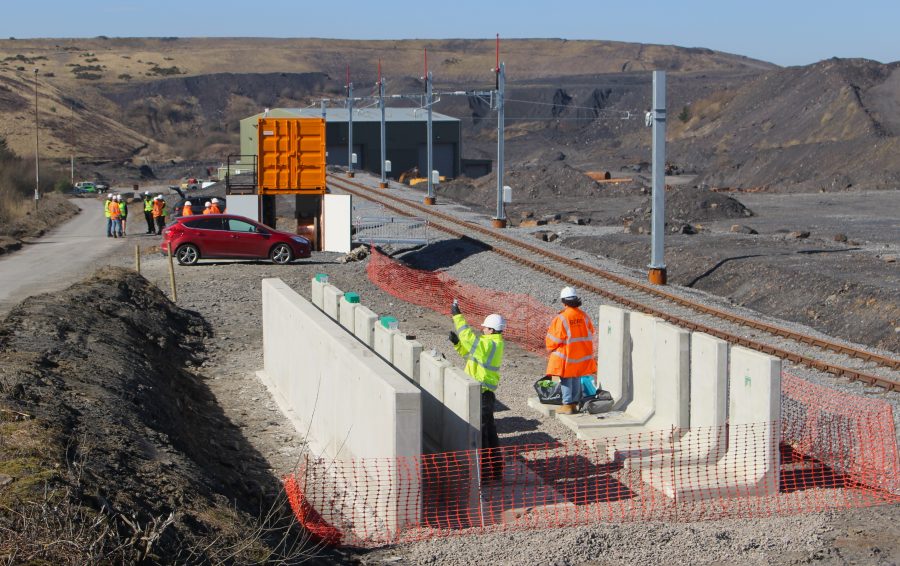
That’s clearly of interest to us at the Global Centre of Rail Excellence. At GCRE the UK has the opportunity to develop the continents first ever purpose built site for rail infrastructure testing, something that will not only build new and unique sovereign capability in rail R&D but also making the UK a global leader in rail safety, standards and technology development. The innovation cluster that could form around GCRE – the spinouts, new businesses and export opportunities – could at the same time support new green jobs and place-based growth on the western edge of the South Wales coalfield.
The UK Government could use its powers to support this opportunity along by mandating a new ‘Test-British Grow-British’ approach to rail innovation which would require a greater share of rail products and testing to be done here in the United Kingdom at facilities like GCRE. By using its policy muscle in creative ways like this, GCRE would in turn become more attractive to potential investors interested in getting on board with such a venture.
A positive recent step which could make this agenda work is publication of the new UK Treasury Green Book earlier this month. The revised document, which is used as a guide to decision making processes for investment, recognises that in the past there has been insufficient emphasis on place-based objectives.
‘For too long, decisions made by previous governments meant that parts of the UK have lagged behind others when it comes to public investment.’
‘The new Green Book makes sure that investment decisions are no longer based solely on single metrics such as benefit-cost ratios, and that these metrics are not wrongly used to compare investment choices across different regions or between urban, rural and coastal communities. Instead, decisions must take into account the full range of impacts of different investment options, giving a fair hearing to every part of the UK.’
Of course the Green Book is just a tool. It’s not a tablet of stone where every answer can be found. But if departments across Whitehall choose to use it – and align it with some of the policy creativity signalled by the Industrial Strategy – then it could help unlock the UK’s growth challenge and give deindustrialised areas new economic purpose. Rail innovation is just one area where new thinking, a more appropriate appetite for risk and coordinated action could reap significant economic rewards.
A lot has been spoken about in recent weeks about whether the UK has a growth plan. It does. The question is whether we, collectively, have the boldness to put it into action.