The Tools of Translation
By Simon Jones
Chief Executive, GCRE Ltd
The Chancellor of the Exchequer’s recent Mais Lecture was very interesting.
On the topic of growth, she emphasised a point many of us have long understood: there are limits to building an economy too reliant on one, narrow stretch of the country to drive jobs, prosperity and opportunity.
She argued that the UK “…requires a break with the past, with the laissez-faire politics of the passive state, the fiction that a strong economy could be built on the success of just a few places…”
In her lecture, the Chancellor made the case for a more dynamic role for government to change that pattern – an active and strategic state working in partnership with business. She made the case that technology development and the innovation clusters needed to support it are crucial catalysts for growth, and that this should be pursued as a place-based agenda.
“All four nations, and every region, has something to contribute, and a claim to a fair share in UK-wide prosperity. Each part of Britain can carve out its own niche in industries crucial to the UK’s prosperity and security, drawing on the skills of their workforce, their existing industrial strengths, and the natural assets on which they are built.”
She made clear that government’s role is one of “providing public investment, to derisk new opportunities, shape markets and crowd in private investment.”

I for one support this active and strategic state approach. But at the same time feel we must be realistic about the step-change required to achieve it and two major reports published in the days after the Chancellor’s speech underline that challenge.
The first of these was the latest UK Innovation Report 2026, which highlighted that the UK is already a leading global research and R&D investor, spending 2.68% of GDP on R&D (3.5% of global spending) and ranks fourth worldwide for scientific publications, with a 40% increase between 2007 and 2022.
Yet in the UK not enough of it is captured by – and has an impact in – places outside the golden triangle. Too often excellence in research doesn’t automatically translate into commercial opportunity and industrial competitiveness. In the same time period high-technology exports have declined from 8.7% to 6.4% of total exports. Most UK high-value start-ups are concentrated in areas such as financial services, enterprise tech and insurance, with far fewer in industrial sectors. Since 2012, 80% of UK university spinout IPOs have taken place overseas, mostly on the US NASDAQ.
The second was a report launched by the Connected Places Catapult, which explored the innovation opportunities in transport and construction over the next decade. It highlighted that the innovation market across transport, construction and data is significant, accounting for around £265bn GVA today, but projected to rise to up to £680bn by 2035.
Much of this reflects the importance of transport to our daily life. Road and railway projects account for around 70–75% of government spending on economic infrastructure, with £19bn spent each year maintaining vital our road and railway network. Yet the report identifies a structural barrier in taking research ideas from development to deployment. And an important element of that gap is in the infrastructure available to firms for testing and commercialisation.
“For high potential businesses to break through, we must provide real world testing and access to experimentation. This can be challenging, particularly in live transport systems…”
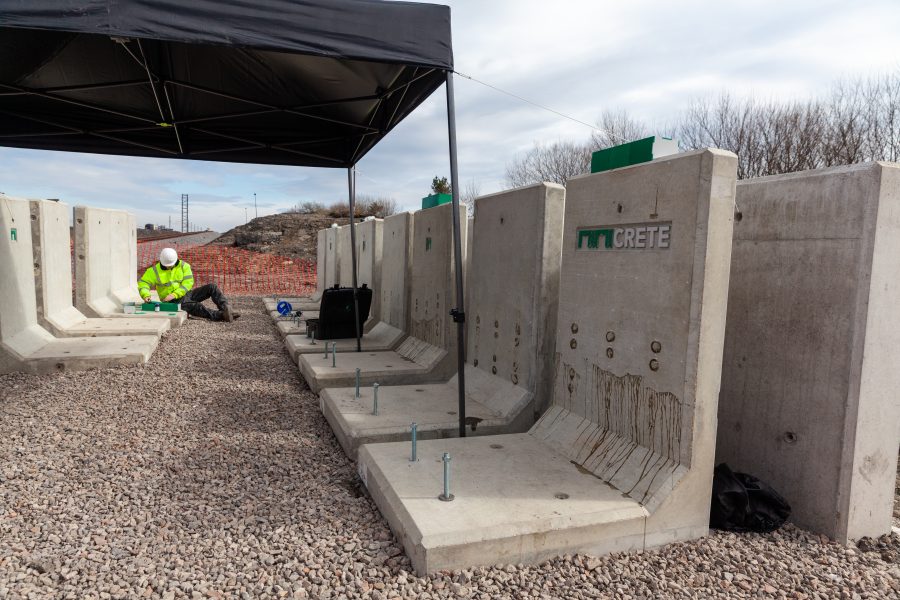
Solving this will not be easy, but we should be positive. Its clear that we have many of the raw ingredients we need to make R&D and innovation in the UK a tangible driver of economic growth and lots of opportunity to be creative in how that can be done in a place-based way. But its clear that we need to be more strategic in thinking about the ‘tools of translation’ if we are to bring this vision to life. In particular we need to consider carefully the infrastructure we need to turn the significant national resources we are spending on R&D into new jobs, new exports, and new opportunities in de-industrialised areas of the country.
Getting this right is essential. We are living through some of the most turbulent and unstable times in modern history. Perhaps not since the early 1970s and the global oil shock have we seen such disruptive forces affecting our economy, politics and our daily lives.
Technological change and the rise of Artificial Intelligence are reshaping investment flows and creating unease at the pace of change. The transition to net zero and the urgent need for renewable energy capacity bring uneven challenges across regions. Perhaps most importantly, disparities in wealth and opportunity between thriving urban centres and de-industrialised communities are driving political discontent on a scale not seen since Edwardian times.
For a country like Wales – a nation with deep industrial roots but heavily buffeted by technological change and globalisation – how we navigate these waters in the coming years will shape our country for future generations.
I sincerely believe that there are proactive ways in which places like Wales can act positively to turn the disruption we are seeing into resilience and new economic growth. There are strategic opportunities that we could take that would build new sovereign capabilities into the UK economy and at the same time help us in Wales rebuild local prosperity.
One promising area in which we can do that is rail innovation.
The Global Centre of Rail Excellence (GCRE) offers the chance to fill a gap in the European rail industry and develop a new hub for international-standard research, testing and innovation in a live railway environment. It could support the Chancellor’s ambitions by positioning the UK as a leader in net-zero technology development and standards, creating new jobs and skills in Mid and South West Wales, and help UK industry and academia commercialise more of the outstanding R&D it produces.
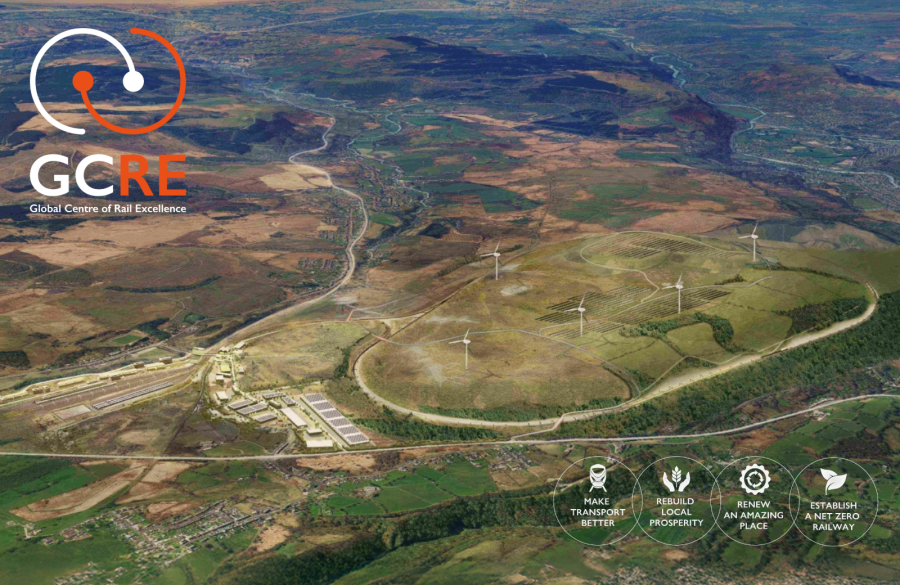
The need for such a facility is all too painfully clear. HS2 is just the latest project to have been significantly impacted by the lack of high-quality testing facilities. The absence of adequate facilities for rolling stock and infrastructure testing in the UK is severely constraining the team behind it, costing precious time and treasure. The Elizabeth Line in London is another example from the very recent past. The core infrastructure was largely built by 2017, but the line could not open until 2022 in large part because the trains could not run without the necessary systems integration across the line.
Every year we waste millions and millions of pounds of taxpayer’s money because problems with rail kit, technology and complex systems holds up project delivery. We can tackle this and in a way that makes it an economic opportunity for our nation at the same time. GCRE is part of that solution.
The UK Government has itself used its investment muscle to create jobs and support more effective delivery in the domestic renewable energy sector through its development of a ‘Build it in Britain’ approach in the supply chain. Recently, the Chancellor went further and committed to procure up to £1 billion of quantum computers from the first UK companies to successfully make them at commercial scale in order to develop new capability in the UK economy. We need more of this kind of policy creativity to turn national investments into greater nationwide prosperity.
There’s no reason why the same policy and investment creativity can’t also be applied to rail in order to make testing and innovation in that sector a new economic strength in the UK. The UK Government could use its powers to support such an opportunity by mandating a new ‘Test-British, Grow-British’ approach to rail innovation which would require a greater share of rail products and testing to be done here in the United Kingdom at facilities like GCRE.
At the RIA Innovation Conference last week, the UK Minister for Industry Chris McDonald MP described GCRE thus far as “…a strong example of fruitful collaboration between the devolved administration, central Government and industry.”
We now need to take this partnership to the next level if we are to bring GCRE to life; translate more of the world class rail research we produce in the UK into tangible industrial growth and realise the promise of the strategic, place-based economic agenda the Chancellor talked about. But it needs political and institutional bravery.