Prove. Progress. Perform.
By Rob Forde
Director of Strategy and Skills, Global Centre of Rail Excellence
One of my favourite things about working in innovation is getting to understand the stories that lay behind the ideas.
Whether it’s the development of ground-breaking new technologies or cutting-edge services, the most dramatic element of R&D is rarely the product or the idea itself. Even in a world of AI and rapid technological breakthroughs, for me what resonates most deeply are the people behind the innovations.
The lengths that individuals and teams will go in order to bring new ideas to market. The jeopardy and the risk that often sits behind new developments. The fine line that exists between success and failure.

That is why 2025 has been such an interesting twelve months for the Global Centre of Rail Excellence (GCRE) team. The year began with a bang, with an event on site that marked the culmination of a more than two-year collaboration with Innovate UK to deliver the Innovation in Railway Construction (IIRC) programme. Funded by the UK Government’s Department for Business and Trade, GCRE hosted the competition, providing teams with a unique environment to develop, test and refine ideas designed to make future railways greener, more innovative and with new technologies more cost-effective to deploy.
The project concluded with a showcase day at the GCRE site, attended by more than 200 industry and VIP guests. Twelve teams that had progressed to the second funding round demonstrated live prototypes of their innovations at our site. For us at GCRE, the event was a powerful demonstration of what the facility is designed to do. When fully constructed, GCRE will be a live, purpose-built railway that makes it easier, faster and more affordable to research, test and certify new innovations before they are deployed on the operational network.

The day itself was a major success and the first time so many rail innovations had been demonstrated in the same place at the same time. Although modest by Innovate UK standards, with £7.4 million of funding, the programme felt distinctive. One reason was the rare opportunity to publicly showcase technologies enabled by a funding competition. Conversations with the Innovate UK team on the day reinforced how valuable it is to shine a light on outcomes, not just awards.
For many of us at GCRE, the showcase felt like the culmination of a two-year journey. But what followed was even more remarkable. Over the remainder of the year, we watched what those twelve teams went on to achieve because of what they been enabled to do at the site.
Universal Signalling was one of the teams presenting at the showcase. The U-Cross system developed through the programme provides signallers with real-time information on the precise location of trains, enabling faster and safer decision-making at user-worked level crossings. The technology has the potential to significantly reduce the cost of signalling on rural routes, opening up more affordable upgrades and line reopenings across the network.

Following their work and trials at GCRE, Universal Signalling announced new equity investment in their company; the opening of a new headquarters for the business and the successful completion of their first mainline trial in collaboration with Network Rail. Their ambition to deliver re-signalling in “days, not decades” is beginning to feel very real.
“GCRE enabled us to demonstrate some of our proposition on track. Being able to bring people to site to show them what we are working on was very valuable, as this isn’t just ‘another signalling product’. It has accelerated what we’ve been able to do as a small company in a short space of time. Within a few months of the end of that project we secured both our first trial with Network Rail and a significant equity investment.”
– Dr Sam Bemment Chief Executive, Universal Signalling
Overhead line specialists Furrer+Frey were another team to progress through the IIRC programme. Their modelling showed that at least 20% of civil interventions on recent major electrification projects could have been avoided with better testing. The two projects they developed through IIRC aimed to reduce the cost of electrification in the UK and internationally.
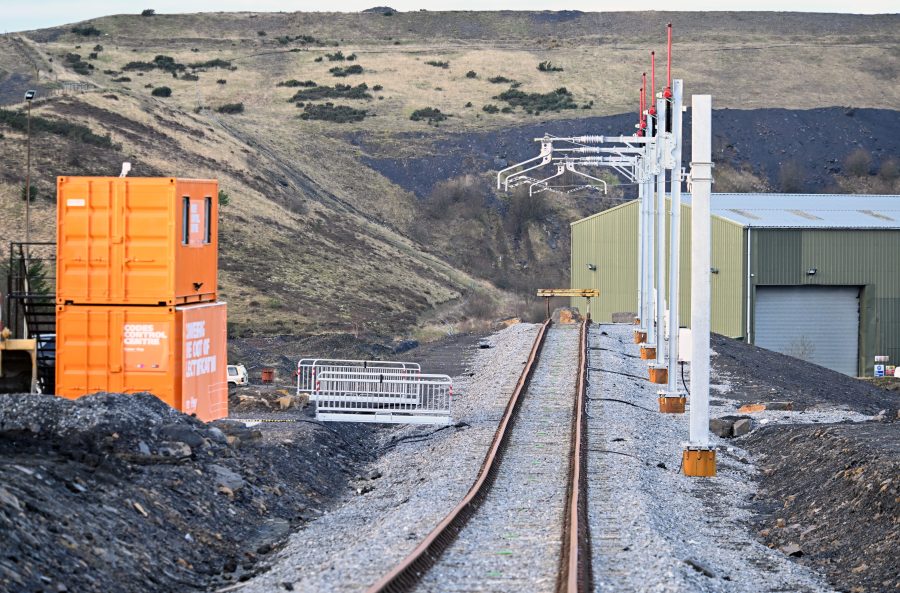
Since the competition, their innovations have attracted international commercial interest. One of their projects – CODES (Cost-Reducing Dynamic Electrification Gradient System) – won the Best Use of Technology award at the Spotlight Rail Awards Cymru. CODES uses modified masts and dynamic height adjustment to replicate planned electrification on a real railway, allowing far more effective testing before construction.
Another heartening story from the programme was Mimicrete, a spin-out from the University of Cambridge. Through IIRC, the team has developed a self-healing concrete technology designed to reduce carbon emissions and long-term repair costs. The material heals cracks as they form, limiting further damage, structural issues and the need for early replacement.
The Mimicrete technology is a strong example of how rail innovation can drive international export potential. In 2025, the company secured strategic investment in their company; generated significant overseas interest; promoted its product in the Far East – even featuring on screens in New York’s Times Square!
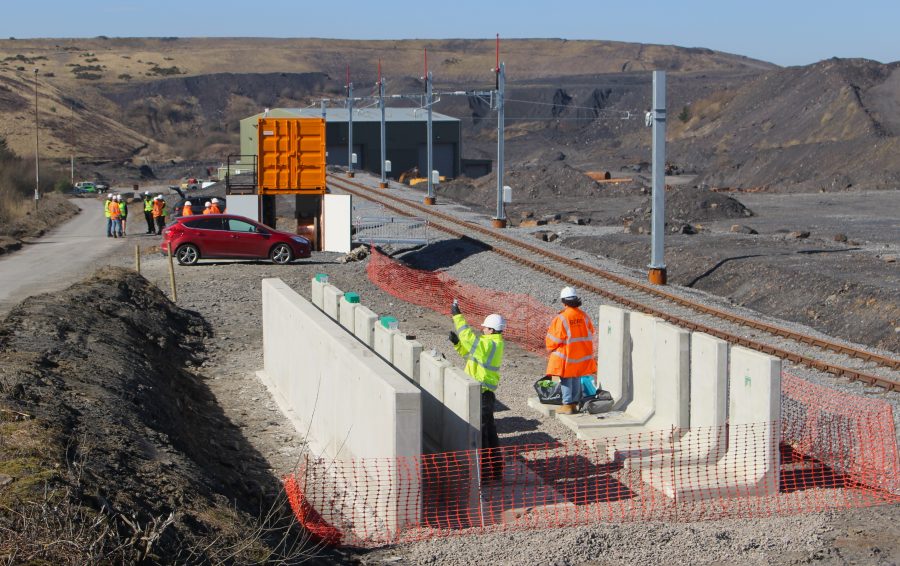
There have been many other successes from the programme. Taken together, these stories offer a powerful window into what GCRE can enable when fully developed. As a world-class hub for rail technology innovation, GCRE has the potential to become a unique international strength for the UK rail sector, as it develops as a facility for faster and more creative innovation.
Prove. Progress. Perform. That’s the GCRE strapline. We certainly saw that in 2025 through the IIRC competition and the results it helped spawn. The challenge now is to get the larger GCRE site funded and constructed so we can help more talented teams write their own dramatic innovation stories.