The In-Tray
Simon Jones
Chief Executive, Global Centre of Rail Excellence
For any new government, the first few weeks are always busy, with new Ministers taking up post and getting under the bonnet of their portfolios with officials. The hustle and drama of the election has subsided. This is where poetry must become prose. From here on in, it’s about the reality and the trade-offs of policy delivery.
The new Welsh Government certainly has much to consider when it comes to growth and prosperity. It has painted in bold strokes the vision of the Welsh economy it wants to see. Critically, it has pledged to closing the economic gap between the regions of Wales; to establishing a new National Development Agency; said it is committed to using innovation as a driver of new jobs and economic clusters; and vowed greater encouragement for Welsh-owned businesses.

I for one wish them well. We need more growth in Wales. But the fiscal landscape is – and will likely remain – challenging. Not all the levers for stimulating new jobs and activity lie within Wales. There will be a need for clear priorities, not only in terms of capital investment, but also in where new Ministers place their finite resources – their time, energy and focus. Above all, there will be a need for creativity and deftness.
One of the biggest structural challenges for the new Welsh Government and Cabinet Minister for Enterprise, Connectivity and Energy, Adam Price will be to not only expand the Welsh economy in quantum, but make sure that every region of Wales benefits from that growth. That’s why a place-based approach will be critical, ensuring that all parts of Wales are empowered to identify and build on existing strengths and develop new and emerging industrial capabilities for the future. The Corporate Joint Committees have already done some important and innovative work in this area which should be built upon by the new government.
The challenge is perhaps most vividly seen in mid and south west Wales. The area already has a number of key economic strengths, including sectoral and supply-chain expertise in areas such as steel, defence, agri-tech, energy and life sciences. It has critical innovation and skills assets, including high-quality universities and FE colleges. And it possesses strategic infrastructure, including a network of commercial ports, among them the UK’s largest deep-water facility.
But at the same time, the area has major structural challenges. The closure of the blast furnace at the Port Talbot steelworks has left more than 2,000 individuals out of work and ruptured the regional supply chain. In January 2025, a major report highlighted that productivity in Powys, the biggest local authority in the region, was only 63% of the UK average, lower than in any other local authority area in the UK. Analysis has shown that while private-sector employment has grown in pockets of south east and north east Wales over the last decade, places like mid and south west Wales have seen significant falls.
The good news is that there are opportunities for the new government to help the region build a more powerful economic engine – the emerging Celtic Freeport; the supply-chain opportunities of floating offshore wind; and the development of the new electric arc furnace at Port Talbot all offer hope for the future. Key for the new Welsh Government will be to continue to enhance the diversity of the region’s economic base. The Independent Climate Change Committee (CCC) published a report in May 2025 stating that governments should have done more, far sooner, to diversify key elements of the regional economy around Port Talbot and use local industrial strategy to create alternative employment in an area heavily dependent on one industry.
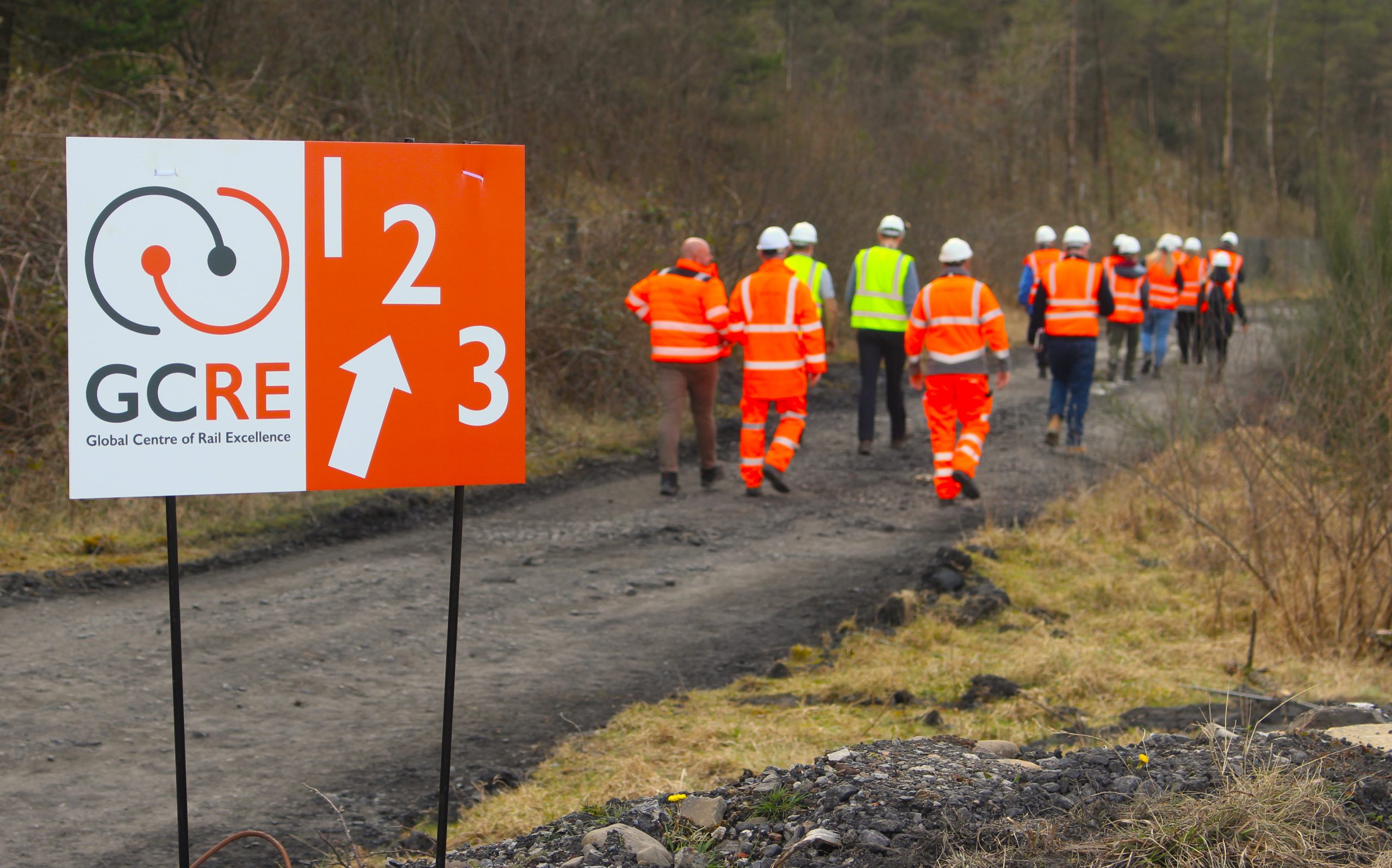
The Global Centre of Rail Excellence (GCRE) could be an important contributor to that effort. As a new facility for rail research, testing and innovation, GCRE would add unique capabilities to the regional economy. As Europe’s only purpose-built site for infrastructure testing, able to help accelerate the UK’s transition to net zero rail technology, GCRE could help create more than 1,000 jobs in its first ten years and add £1.2bn in GVA over its lifetime. The facility could become a new focal point for local SMEs and new business creation, as a supply chain naturally develops around it. GCRE has been identified by partners, including the CJC, as a priority for the region.

The Welsh Government is due to make a decision on the future of the GCRE rail project later this year, specifically on whether the project can be further de-risked through additional public funding and/or the provision of a guarantee in order to secure the private capital funding needed to take the project forward.
What potentially supports that decision is that the large site on which GCRE is being developed also has potential as a location for energy and data-centre (DC) infrastructure that would complement the rail project. Our search for an energy and DC partner to develop such assets is progressing well, with a number of blue-chip companies having expressed interest. Any such development would be separate from the rail project and would not need public support. Indeed, it may bring in significant and additional non-domestic rates revenue which may make support for the rail project more affordable. Bidders are now progressing through a dialogue phase with us, ahead of a partner being formally appointed by the end of 2026. Whilst there is some way to go, what is emerging through the process is exciting and provides a strong platform from which to develop the rail cluster.
Mid and south west Wales is exactly the kind of area where the new Welsh Government will need – and want – to show tangible impact. It is a place with unique strengths, but also a good example of where creativity and ingenuity will be needed in policy delivery over the coming years to ensure every part of Wales has the economic engine it needs to thrive.